Chapter 03 · Event discovery → decide & act
Market Events Radar
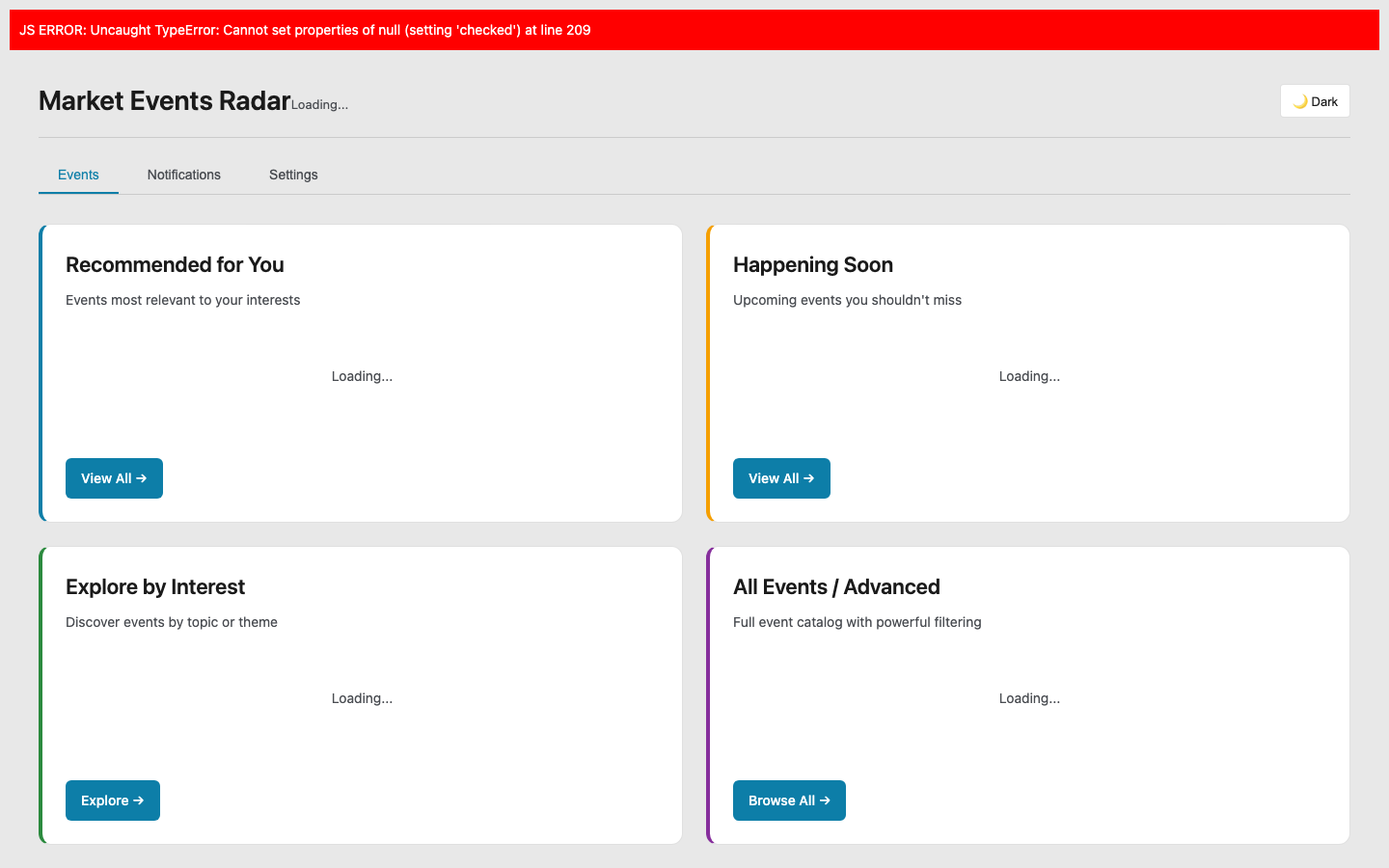
A decision-focused events discovery surface — zones for relevance, urgency, and exploration, not a flat calendar dump.
Why I built it
Useful events drowned in flat calendars and infinite lists. Relevance, timing, and “should I act” were mixed into one scroll.
I wanted a decision surface: structure intake so you can choose what deserves attention, not collect everything that exists.
Overview
Market Events Radar is the events face of the Market Radar stack. Sources land in SQLite; the UI splits them into zones — recommended, soon, explore, all — so each zone has a job.
Same backend family as Journalist; different product question: what should I attend to, and when.
Zones
Homepage cards for Recommended, Happening Soon, Explore, and All, each with a short preview and a path into the full zone.
The home page is a decision board, not a dump of every event in the database.
If the first screen is a flat feed, the product has already failed. Zones force the cut before you drown.
Recommended
High-signal events ranked for relevance to stated interests. This is the “worth your time” cut — fewer items, higher bar.
Open it when you want a short list you can actually act on.
Relevance without a ranked cut is just tagging. Recommended exists to protect attention.
Happening Soon
Near-term events ordered by date so urgency is visible even when relevance is similar.
Same event can be interesting next month and mandatory this week — this zone makes that difference obvious.
Timing changes the decision. A calendar that hides urgency is only half a decision aid.
How I built it
Flask over SQLite sources and events, adapters for intake, signal scoring you can still explain, and dedicated zone pages. Shares the Market Radar backend with Journalist.
Hard choices: zones versus one infinite feed; scores that stay understandable; source health visible without turning the UI into a status page.
What I got wrong, and what’s next
Demo seeds still show too many Unknown tags, which undermines trust in the cut. I would tighten first-run interests and curation so the first screen feels decided.
The zone idea is right; the seed quality has to catch up.